Google Unveils Selfie Deepfake Avatars in Flow AI Overhaul
The Silicon Valley giant introduces a digital clone capability for its Flow software, allowing creators to insert AI-generated versions of themselves into videos without filming.
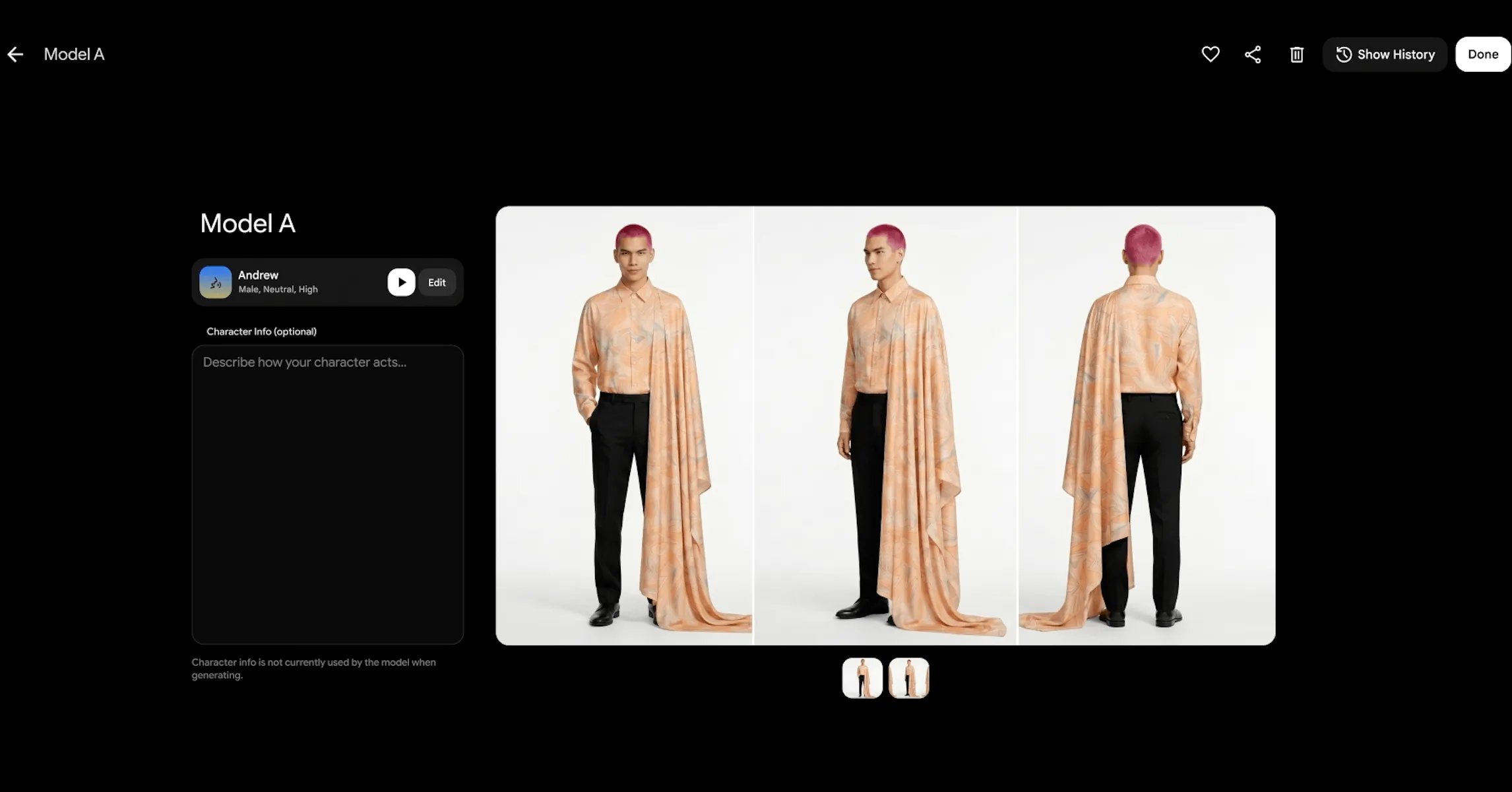
Google has expanded its artificial intelligence capabilities with a new avatar feature within its Flow creation software, unveiled at its annual I/O developer conference in Mountain View, California. The update, powered by the newly released Omni Flash video model, enables users to generate selfie-style deepfakes by scanning their likeness and recording voice and movement data. This allows creators to insert digital clones of themselves into AI-generated videos without the need to film themselves.
Omni Flash succeeds the previous Veo model, offering richer detail and improved character consistency to address previous weaknesses where created characters could warp during successive generations. The avatar feature is accessible through the Flow software, the Gemini app, and YouTube. To set up an avatar, users scan a QR code and record themselves saying a string of numbers while moving their head to capture every angle. Google’s initial focus restricts this capability to users creating avatars of themselves, rather than generating images of other individuals.
Elias Roman, vice president of product management at Google Labs, demonstrated the tool by generating a video of himself in front of a dumpster fire, which he then edited using natural language prompts. The feature is part of Google’s broader strategy to make AI agents and 'vibe coding' more mainstream, coinciding with the release of the Gemini 3.5 model family and the introduction of Gemini Spark, an always-on AI agent for Workspace.
All videos generated with the Omni model, including those featuring user avatars, carry Google’s SynthID watermark to identify synthetic content. The announcement follows a similar move by YouTube Shorts, which added a limited option for users to create AI avatars for insertion into clips on that platform. Other industry players, such as Meta, are also exploring generative AI to transform creator outputs, though these tools remain polarising for audiences concerned with authenticity.
Flow users can now repeat custom instructions and create automated workflows to sort similarly styled clips into folders. This overhaul represents Google’s first dedicated product line for creative work, distinct from its existing productivity and developer tools. The initiative aims to provide the next generation of creators with streamlined production pipelines, allowing for the generation of vertical videos and other content without traditional filming requirements.
