Google DeepMind chief predicts 50 per cent chance of AGI by 2030
The DeepMind CEO unveiled new scientific tools and reiterated his timeline for artificial general intelligence, defining the singularity specifically as the arrival of full AGI.
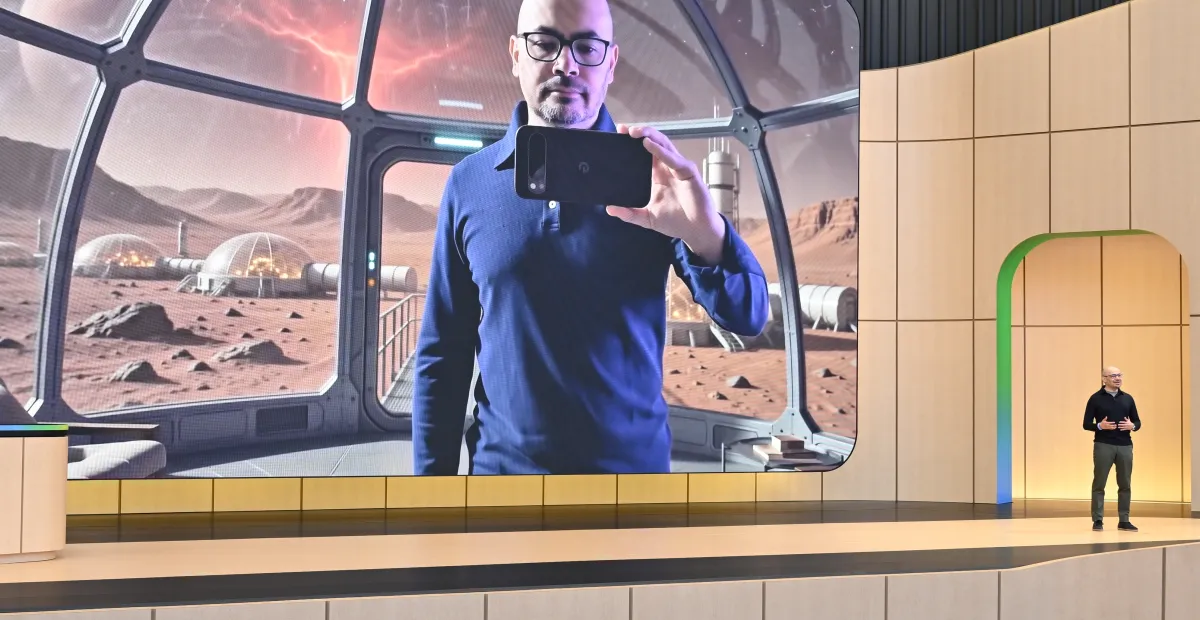
Google DeepMind chief executive Demis Hassabis closed the Google I/O keynote on Tuesday with a stark assessment of the artificial intelligence landscape, describing the current era as the "foothills of the singularity." In his closing remarks, Hassabis characterised the moment as "profound for humanity," asserting that Google’s technology would act as a "force multiplier for human ingenuity" and usher in a new golden age of scientific discovery.
During the address, Hassabis introduced Gemini for Science, a suite of tools and experiments housed within Google Labs and Google Antigravity. The initiative is designed to accelerate scientific research, with specific ambitions to "reimagine drug discovery with the goal of one day solving all disease." The announcement positions the new tools as critical infrastructure for researchers aiming to leverage AI for complex biological challenges.
Hassabis used the platform to reaffirm his previous forecast regarding the timeline for artificial general intelligence (AGI). He stated there is a 50 per cent chance of achieving AGI by 2030, a prediction he clarified in a Bloomberg interview a few months prior. In that discussion, Hassabis defined the singularity specifically as the arrival of full AGI, noting that while the industry is not yet at that point, the current developments represent a significant step forward.
The rhetoric employed by Hassabis aligns with broader narratives within the technology sector regarding AI’s potential. Microsoft chief executive Satya Nadella has previously described AI as "cognitive amplifier tools," while Luma AI chief executive Amit Jain has claimed that artificial intelligence is key to saving Hollywood. These statements reflect a common industry tendency to frame AI advancements in terms of transformative, era-defining capabilities.
While the term "singularity" has historically been associated with futurists such as Vernor Vinge and Ray Kurzweil, Hassabis’s definition is narrower, tying it strictly to the achievement of full AGI. His description of the current period as merely the "foothills" suggests that while the trajectory is set, the destination remains distant. The prediction of a 50 per cent probability for AGI by 2030 remains a speculative forecast, and the claim that current tools will lead to solving all disease is a long-term aspiration rather than an immediate capability of the software.
