GM opens $900 million facility to accelerate lithium-manganese-rich battery production
General Motors has inaugurated its Battery Cell Development Center in Michigan, a critical step in its strategy to replace expensive nickel-manganese-cobalt batteries with more affordable lithium-manganese-rich alternatives for mid-range electric vehicles.
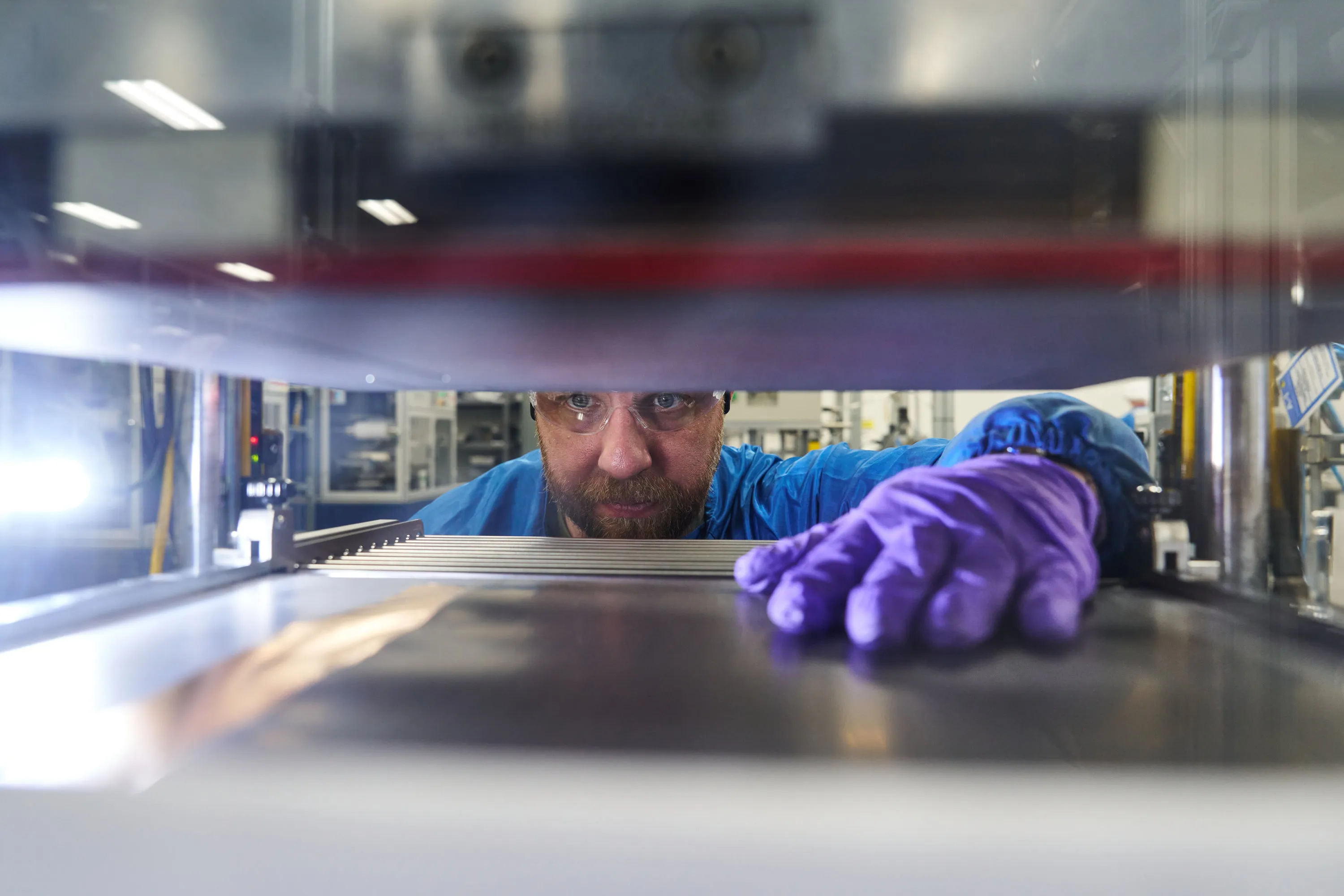
General Motors has opened a new 500,000-square-foot Battery Cell Development Center at its Warren Tech Center in Michigan. The facility is a central component of a $900 million investment aimed at accelerating the commercialisation of lithium-manganese-rich (LMR) battery chemistry. GM intends to use the centre to bring LMR-based electric vehicles to market one year ahead of its previous schedule, targeting a launch by 2028.
The new building serves as a scaled-up pilot line, bridging the gap between research conducted at the adjacent Wallace Battery Cell Innovation Centre and mass production at gigafactories in Tennessee and Ohio. Once fully operational, the facility will produce approximately 2,500 battery cells per day, equating to roughly 0.5 gigawatt-hours annually. This capacity allows GM to test the commercial viability of new chemistries at a scale larger than laboratory experiments but significantly smaller than full production lines.
GM is utilising artificial intelligence and digital twin technology to simulate production processes and reduce costs. The company has logged over 150 million CPU hours for LMR simulations, while a digital twin of the facility is used for operational debugging and safety checks. GM expects the first batches of LMR cells to roll off the production line later this year.
The new LMR chemistry is positioned to replace nickel-manganese-cobalt in mid-range vehicles, aiming to reduce costs by at least $6,000 compared to previous iterations while maintaining a range of over 400 miles in models such as the Chevrolet Silverado EV. This shift is designed to make electric vehicles more cost-competitive with internal combustion engines, addressing rising material costs and intense global competition.
To deem a chemistry commercially viable, the facility targets achieving an 85% yield rate within 18 months. This benchmark ensures that new battery recipes can be successfully scaled from small-batch research to high-volume manufacturing without significant delays or financial losses. The centre represents a pivotal element in GM’s strategy to reboot its electric vehicle portfolio after recent production adjustments.
The investment underscores GM’s commitment to developing the right battery for the right application, moving away from the expensive nickel-manganese-cobalt chemistry that has dominated the high-end segment. By streamlining the transition from research to production, GM hopes to offer cost-competitive electric vehicles with sufficient range to appeal to mainstream consumers.
The facility’s opening marks a significant milestone in the company’s broader electrification strategy. As the global electric vehicle market continues to grow, GM’s ability to rapidly commercialise new battery technologies will be crucial in maintaining its competitive position against rivals such as BYD and CATL.
