Four protesters sue DHS and FBI over DNA collection following 'Operation Midway Blitz' arrests
A new complaint filed in an Illinois district court argues that the Department of Homeland Security and the FBI exceeded their authority by collecting genetic data from peaceful demonstrators, citing a lack of legal justification and the dismantling of internal privacy safeguards.
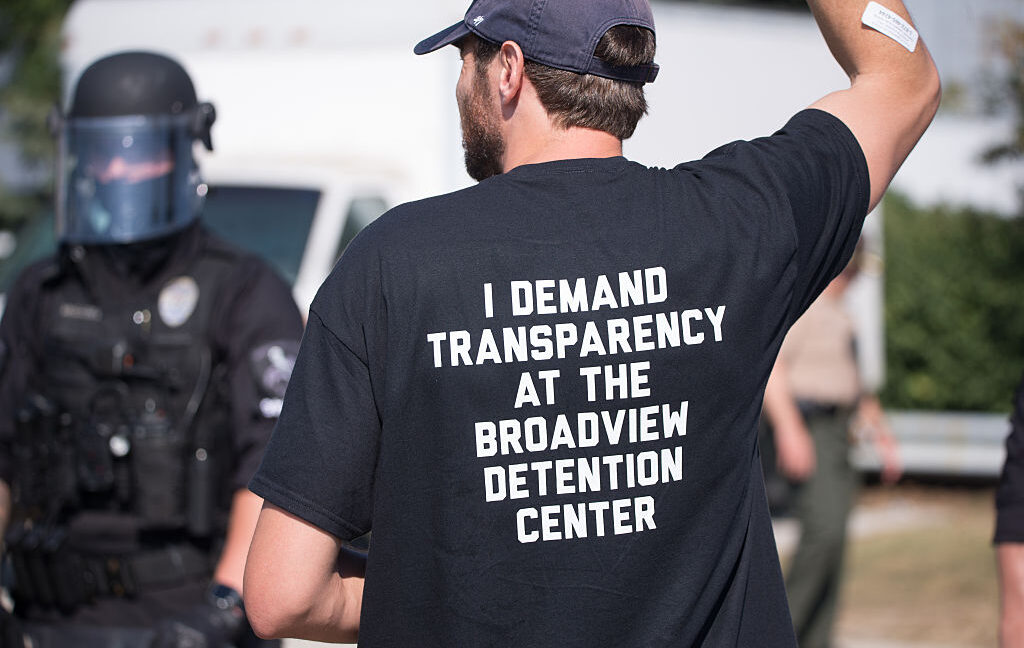
Four individuals have filed a lawsuit in an Illinois district court against the Department of Homeland Security (DHS) and the Federal Bureau of Investigation (FBI), seeking an injunction to halt the collection of their DNA samples. The legal action arises from arrests made during "Operation Midway Blitz" at the Broadview ICE facility, where thousands of federal agents were deployed. The plaintiffs allege that federal officials wrongfully arrested peaceful demonstrators and subsequently collected their genetic material without meeting the legal requirements established by the Supreme Court or Illinois state law.
The complaint asserts that the government uploaded the genetic profiles of the arrested individuals to the Combined DNA Index System (CODIS) for surveillance purposes rather than for identification. The lawsuit contends that this practice creates a vast genetic database designed to track critics of immigration policies. Plaintiffs argue that the agencies have expanded their authority under the DNA Act to collect samples from anyone arrested for any crime, regardless of the offence's seriousness, a practice they claim exceeds congressional intent.
Central to the legal challenge is the assertion that the conditions required for lawful DNA collection were not met. Under Supreme Court precedent, DNA can be collected without a warrant only if an individual has been validly arrested with probable cause for a serious offence, a fact confirmed by a judicial officer. Furthermore, Illinois law restricts mandatory DNA collection to those arrested for specific serious crimes like first-degree murder or sexual assault. The plaintiffs maintain that none of these conditions existed in their cases, noting that out of 92 non-immigration arrests at Broadview, only one protester was convicted, and that conviction was unrelated to the protests.
The lawsuit highlights a significant reduction in oversight mechanisms within the agencies. The complaint states that privacy impact assessments, which serve as internal checks on civil injustices, have been dismantled. Data presented in the filing indicates that zero assessments were reported in 2026, a sharp decline from eight in 2025 and a peak of 24 in 2024. This absence of review, combined with allegations that DHS cut over 240 hours of training courses on constitutional law and lawful arrests, has allegedly facilitated a coordinated federal surveillance programme.
The four named plaintiffs detail their experiences of wrongful arrest and physical force. Dana Briggs, a 71-year-old Air Force veteran, was arrested after a reflexive reaction to being swarmed by agents, while Ian Sampson, a photographer, was pinned down and nearly suffocated before inhaling tear gas. Jacqueline Guataquira and Grace Cooper were also detained in designated free speech zones, with Cooper being the only plaintiff to refuse the DNA sample, an act agents allegedly prevented. The complaint argues that these actions have created a chilling effect, limiting the plaintiffs' ability to participate in future protests and affecting the privacy of their families.
Representing the plaintiffs, Carey R. Dunne of the Free + Fair Litigation Group, described the litigation as addressing a constellation of constitutional violations. The group argues that the unchecked DNA collection places individuals and their families into a surveillance state database of people who have criticised the administration. The lawsuit seeks a declaration that the DNA Act, as applied in these circumstances, is unconstitutional and requests that the DNA samples be destroyed.
