Florida lawmaker denies using AI to draft legislation after Claude signature found in draft
A draft amendment containing the phrase "Claude responded:" has sparked scrutiny over the use of artificial intelligence in legislative processes, prompting the Florida Republican to issue a series of conflicting explanations.
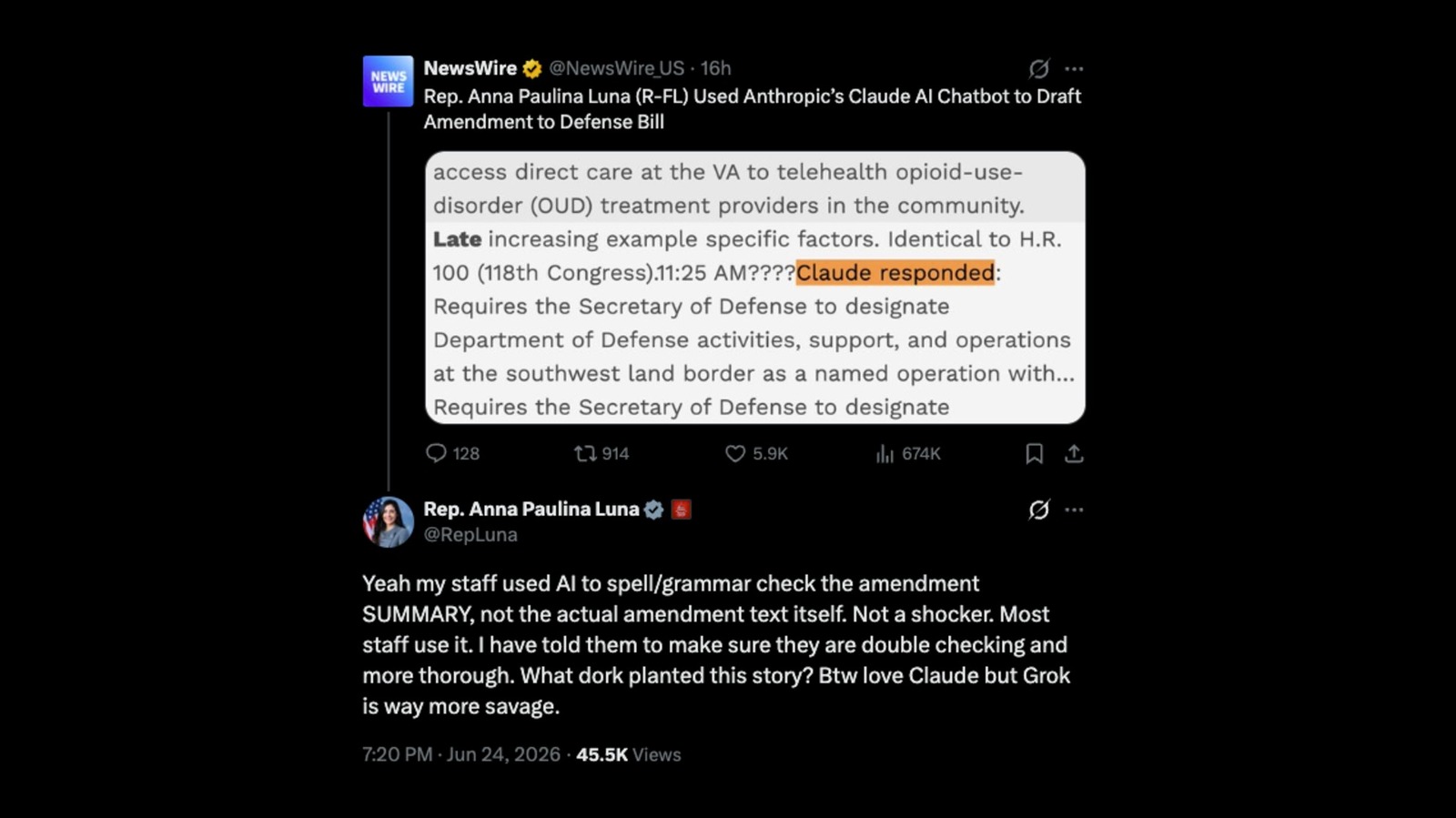
Florida Republican representative Anna Paulina Luna has denied allegations that her office utilised the AI chatbot Claude to draft legislative amendments, following the discovery of a draft document containing the phrase "Claude responded:". The presence of the chatbot’s name in the text indicates direct interaction with the model developed by Anthropic, contradicting claims that the technology was used solely for administrative support.
Luna initially addressed the controversy on social media platform X, stating that her staff "used AI to correct a draft text and didn't edit," and asserted that such practices were common among her team. These initial posts were subsequently deleted, before Luna issued a revised explanation via a screenshot. She clarified that AI was used only for spell and grammar checking on an amendment summary, rather than the actual amendment text, and emphasised that no legislation is ever drafted with AI.
In her subsequent posts, Luna questioned the source of the reporting, asking "what dork planted this story?" and including a tears of joy emoji in her response. She described the document in question as an "AI summary of the bill that's also used for spellcheck," attempting to distinguish between the summarisation tool and the drafting of legislative content.
Tech publication Engadget noted that standard spellcheck tools have been widely available for decades, and typical AI grammar checkers do not insert their brand names into document text. The report suggested that the inclusion of the AI’s name in the text casts doubt on the explanation that the tool was used strictly for proofreading, as such software typically operates invisibly within the document.
The incident highlights the growing intersection of legislative processes and emerging AI technologies, raising questions about transparency and the extent of automation in government work. While Luna maintains that the AI’s role was limited to correcting spelling and grammar, the evidence found in the draft document suggests a more direct involvement with the chatbot than initially admitted.
