First detection of interstellar saccharide supports space-borne origins for life’s building blocks
The discovery, published in Nature Astronomy, marks the first identification of a true saccharide in the interstellar medium and reinforces theories that prebiotic chemistry originates in deep space.
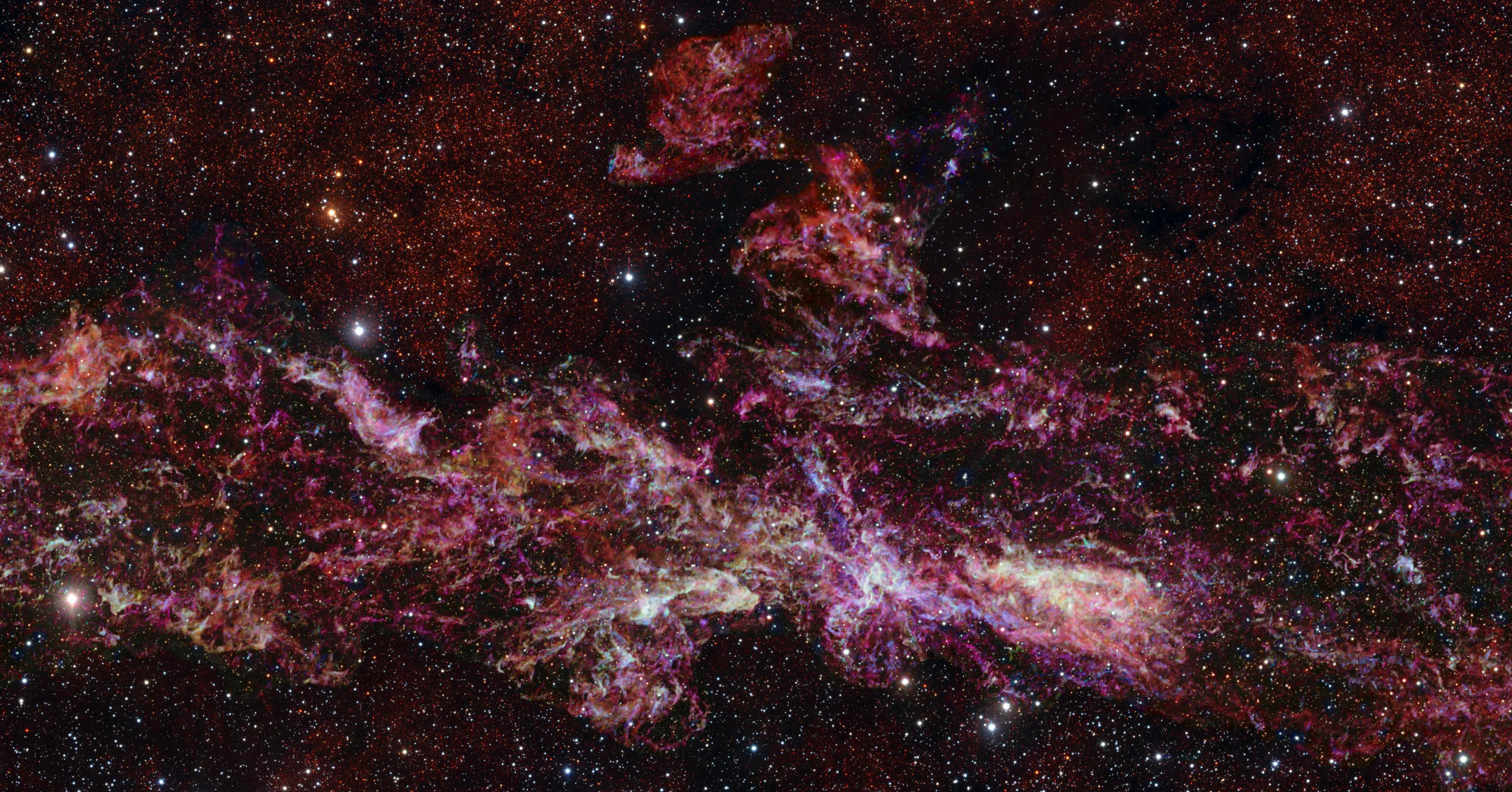
Astronomers have identified erythrulose, a four-carbon monosaccharide, within the interstellar molecular cloud G+0.693−0.027, situated 26,000 light-years from Earth. Published in Nature Astronomy, this finding represents the first detection of a true saccharide in the interstellar medium. The discovery provides empirical support for the hypothesis that prebiotic chemical building blocks essential for life may originate in space rather than solely on Earth.
The study was led by Izaskun Jiménez Serra and utilised data from two radio telescopes in Spain: the Yebes Observatory and the Institute for Radio Astronomy in the Millimeter Range. Researchers identified the molecule by analysing its microwave signature as it rotates. The molecular cloud G+0.693−0.027 is located near the supermassive black hole at the centre of the Milky Way and is characterised by collisions that create a chemical factory environment.
Erythrulose belongs to the ketose family of sugars and is distinct from ribose, a pentose sugar found in RNA. On Earth, it occurs naturally in raspberries and some tanning lotions. While sugar molecules are fundamental to life, serving as fuel for cells and forming part of RNA and DNA structures, scientists have long debated how sufficient quantities accumulated on the early planet. One prevailing theory is that these molecules were delivered via meteorites and asteroids.
This discovery follows a confirmation in December 2025 that the asteroid Bennu contained ribose and other monosaccharides. That finding, alongside the new detection of erythrulose, suggests a growing body of evidence for space-borne prebiotic chemistry. Previous studies have detected various complex organic molecules in space, including alcohols, aldehydes, urea, ethanolamine, and hydroxylamine, but no true saccharide had been confirmed until now.
Jesús R. Flores, a professor at the University of Vigo who did not participate in the study, noted that while prebiotic molecules in meteorites are well known, their specific origin in the interstellar medium had been unclear. He stated that erythrulose is the first true saccharide detected in this environment. The presence of sugars does not constitute evidence of extraterrestrial life, nor does it explain the origin of life on Earth, but it demonstrates that interstellar monosaccharides can be synthesized.