Esper warns air strikes will not alter Iran’s stance as White House vows escalation
Tensions spike following the alleged downing of a US Army helicopter over the Strait of Hormuz, with President Trump accusing Iran and promising retaliation
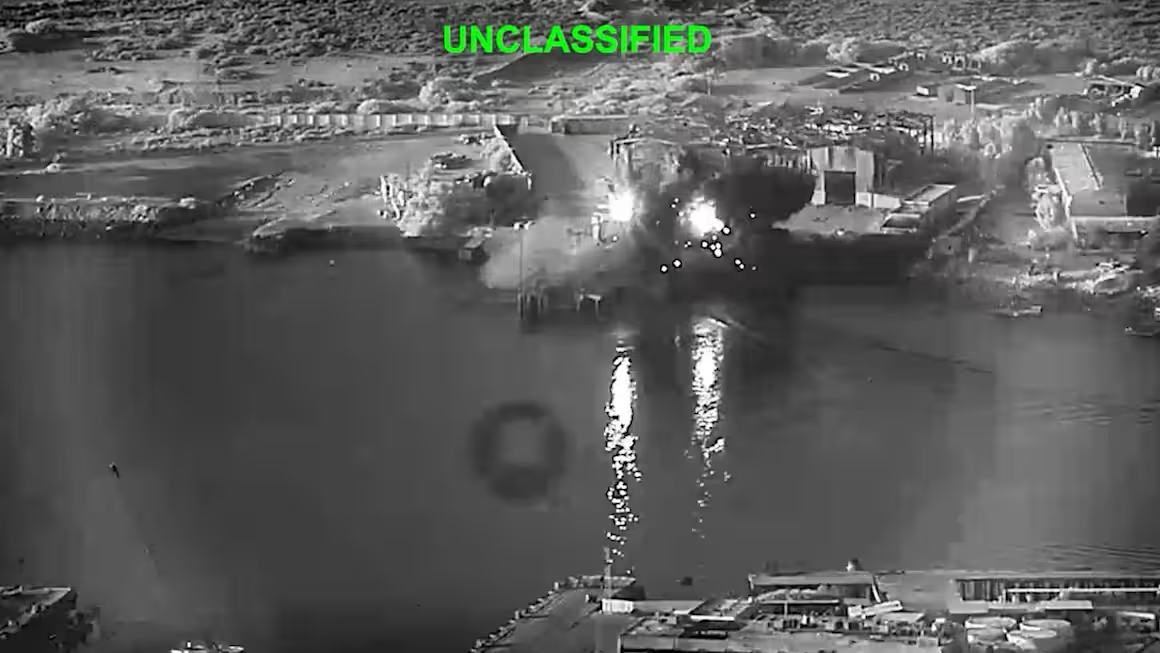
Former US Defence Secretary Mark Esper has cautioned against escalating military action against Iran, telling the Financial Times that increased aerial bombardment is unlikely to alter Tehran’s behaviour. This assessment emerges as US President Donald Trump has vowed to intensify attacks following the alleged downing of a US Army AH-64 Apache helicopter over the Strait of Hormuz.
While Trump has accused Iran of the incident and threatened retaliation, Iran’s leadership maintains it is balancing diplomatic efforts with military preparedness, having previously declared an 'existential war' in response to prior strikes.
The timeline of events indicates a rapid deterioration in relations. Prior to Tuesday, President Trump met with Chinese President Xi Jinping in Beijing to discuss trade, artificial intelligence, and security in the Strait of Hormuz. By Monday night, a US Army AH-64 Apache helicopter was reportedly shot down over the same strategic waterway.
On Tuesday, President Trump issued a statement accusing Iran of the downing and vowing a necessary response. This came despite previous indications that negotiations were ongoing to de-escalate the situation. The incident marks a sharp escalation in military tensions, occurring shortly after Trump had signaled openness to diplomatic solutions.
Esper’s comments to the Financial Times suggest that further bombing will not change Iran’s stance. The former defence secretary’s assessment reflects a personal view on the efficacy of air power in this context, rather than a consensus view or proven outcome.
Iran has declared an 'existential war' following previous strikes and is balancing diplomatic efforts with military preparedness. Ghalibaf noted that while Iran had never welcomed war, it must always be prepared for battle, asserting that the country is balancing diplomacy with military action in pursuit of its national interest.
Uncertainties remain regarding the exact nature of Iran’s future behavioural changes in response to potential further bombing. Statements about Iran’s intent and behaviour must be clearly attributed to sources to avoid presenting opinion as fact, particularly given the speculative nature of Esper’s assessment.
The timeline of events regarding the helicopter downing and subsequent diplomatic meetings should be treated as reported allegations until independently corroborated. The specific details of the helicopter incident and the attribution to Iran are part of the current escalation narrative but require ongoing verification.