Emery’s tactical rigour secures Villa’s first major silverware in three decades
Unai Emery’s fifth European title moves him level with Carlo Ancelotti and Jose Mourinho, while his appointment in November 2022 reversed a relegation-threatened trajectory into continental prominence.
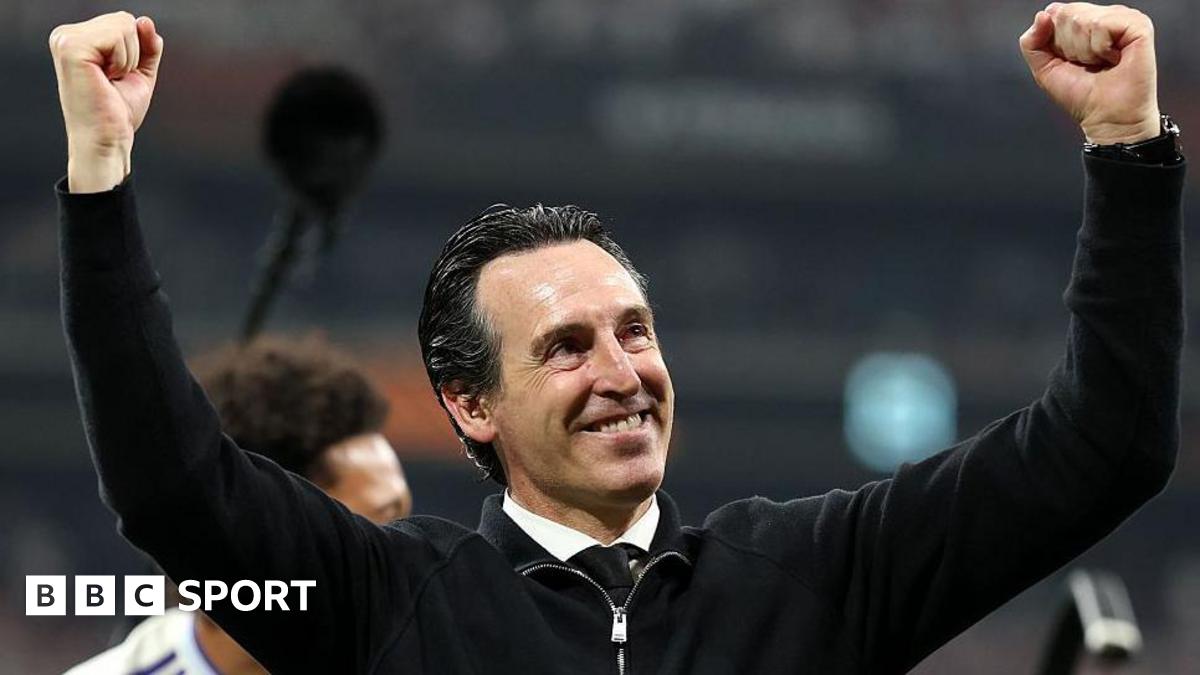
Aston Villa have secured their first major trophy in 30 years, defeating Freiburg 3-0 in the Europa League final with goals from Morgan Rogers, Youri Tielemans, and Emi Buendia. The victory marks the culmination of a structural transformation under manager Unai Emery, whose meticulous approach to preparation and player management has redefined the club’s institutional standing. Emery, 54, now shares the record for the most major European prizes with Carlo Ancelotti, Jose Mourinho, and Giovanni Trapattoni, having previously won the competition three times with Sevilla and once with Villarreal.
The foundation of this success was laid when Emery took charge on 1 November 2022, a period when Villa sat 16th in the Premier League, just one point above the relegation zone. His immediate focus was not solely on the European campaign but on securing a return to the Champions League, a status the club had not held since the 1982–83 season. This dual-objective strategy was validated during the domestic campaign, where Emery prioritised squad management over short-term league points. He rested key players in a home defeat to Tottenham, a decision that drew criticism but was calculated to preserve physical capacity for the Nottingham Forest semi-final. The strategy succeeded, as Villa secured the necessary points elsewhere and ultimately qualified for Europe’s premier club competition for the first time since 2010–11.
Emery’s methodology extends beyond conventional tactical preparation, incorporating rigorous mental conditioning. He engages in three-minute online chess games under his own name to maintain cognitive sharpness and reviews lectures from scientists and thinkers at 2am to expand his analytical framework. This attention to detail also includes studying obscure football matches, such as those involving Racing Santander, to broaden his tactical reference points. By enforcing a regimen where players dedicate 70 per cent of their time to football and focusing on precise body shape and physical details, Emery has cultivated a culture of total professional commitment.
The institutional impact of Emery’s tenure is evident in Villa’s domestic performance. In his first full season, the club set a record by winning 15 consecutive home league games, a feat unmatched in the club’s 151-year history. Former players Mark Albrighton and Ashley Young have acknowledged the magnitude of this shift, with Albrighton noting that Emery has taken the club to a new level and Young describing him as a born winner who has restored Villa’s European prominence. The victory over Freiburg serves as the capstone to a period that saw the club transition from relegation danger to continental champions.
Looking ahead, Emery plans to disconnect from the professional sphere, retreating to his hometown of Hondarribia or Mallorca to spend time with his mother and allow for extended rest. This period of recovery will precede the preparation for the next season, where the expectation is that the club will maintain its elevated status. The extent of Emery’s revolution is measured not only by the silverware but by the structural stability and tactical sophistication he has instilled in a squad that was once fighting for survival.