Cuneflow enters e-paper market with AI-driven meeting transcription tablet
Launched via Kickstarter, the A5-sized slate aims to counter the 'distraction-free' philosophy of rivals like reMarkable by integrating voice recording and automated insights directly into the writing experience.
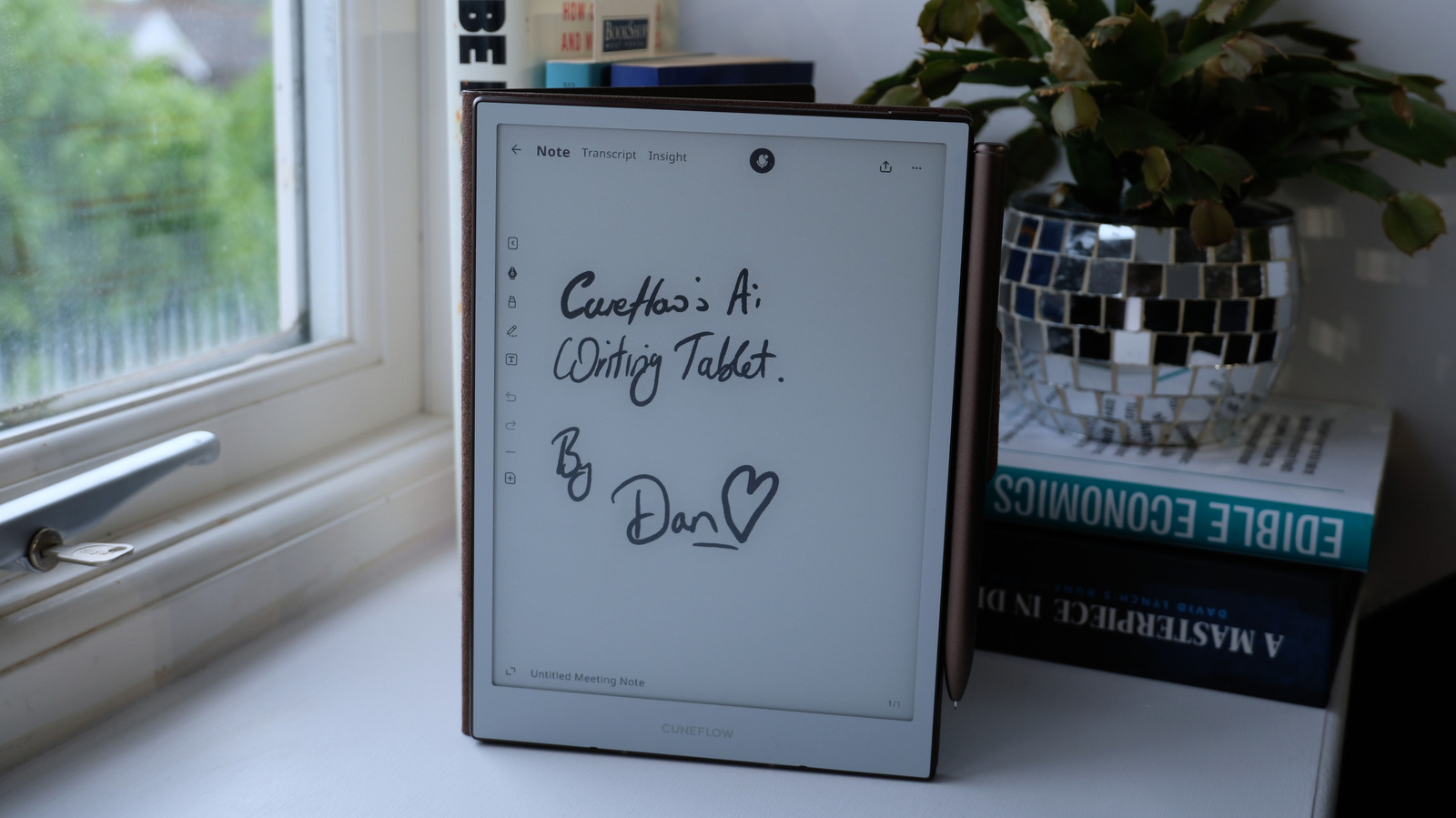
Cuneflow has introduced its first product, an A5-sized e-paper writing tablet designed to automate the administrative burdens of business meetings. Launching via a Kickstarter campaign, the device distinguishes itself by integrating built-in voice recording and artificial intelligence capabilities, a direct counterpoint to the 'distraction-free' analog philosophy championed by competitors such as reMarkable.
The hardware features an 8.2-inch E Ink Carta 1000 display with a resolution of 1,920 by 1,440 pixels, housed in a 230-gram aluminium unibody case. Internal specifications include a 2 GHz dual-core ARM system-on-chip, 4GB of RAM, and 128GB of storage, powered by a 2,450mAh battery rated for seven to eight hours of continuous use. Security is managed through a lock screen password and a fingerprint scanner integrated into the power button.
The tablet’s core functionality relies on the integration of OpenAI and Gemini models to process audio data. When the recording mode is activated, indicated by a flashing red LED, the device captures audio, encrypts it, and processes it in the cloud. Upon completion, the audio file is automatically deleted, leaving only the AI-generated transcript, summary, timeline, and to-do list. Users can verify the accuracy of these insights via an 'Insight' tab that traces conclusions back to specific segments of the transcript.
Despite its functional ambitions, the device’s operating system exhibits the rough edges typical of a first-time product launch. The interface separates notebooks into 'Meetings' and 'Files' categories, but lacks seamless integration between them. For instance, while the AI generates a to-do list with tickboxes, users cannot interact with these items using the stylus. Furthermore, the web client, Cunespace, allows for file transfers but offers no interactive features for transcripts or action items, forcing users to manually copy and paste data.
The writing experience, facilitated by a magnetic Wacom EMR stylus, is described as responsive with minimal lag, though the ceramic nib is noted for being thin and potentially abrasive. Connectivity options include Bluetooth keyboard support, but the implementation requires manual expansion of text boxes, a process users have described as fiddly. The device also lacks landscape orientation support, limiting its utility for certain workflows.
Pricing details remain undisclosed, with Cuneflow stating the cost will fall within the average market range, offering discounts for early Kickstarter backers. The company positions the tablet as a tool for reducing busywork, though the current software limitations suggest it may not yet fully replace traditional digital workflows for all users.
