China’s Long March 7A rocket failure raises concerns ahead of Chang’e 7 lunar mission
A failure of the YF-100 engine in China’s Long March 7A rocket could delay the upcoming Chang’e 7 mission, intensifying the race with NASA for lunar resources.
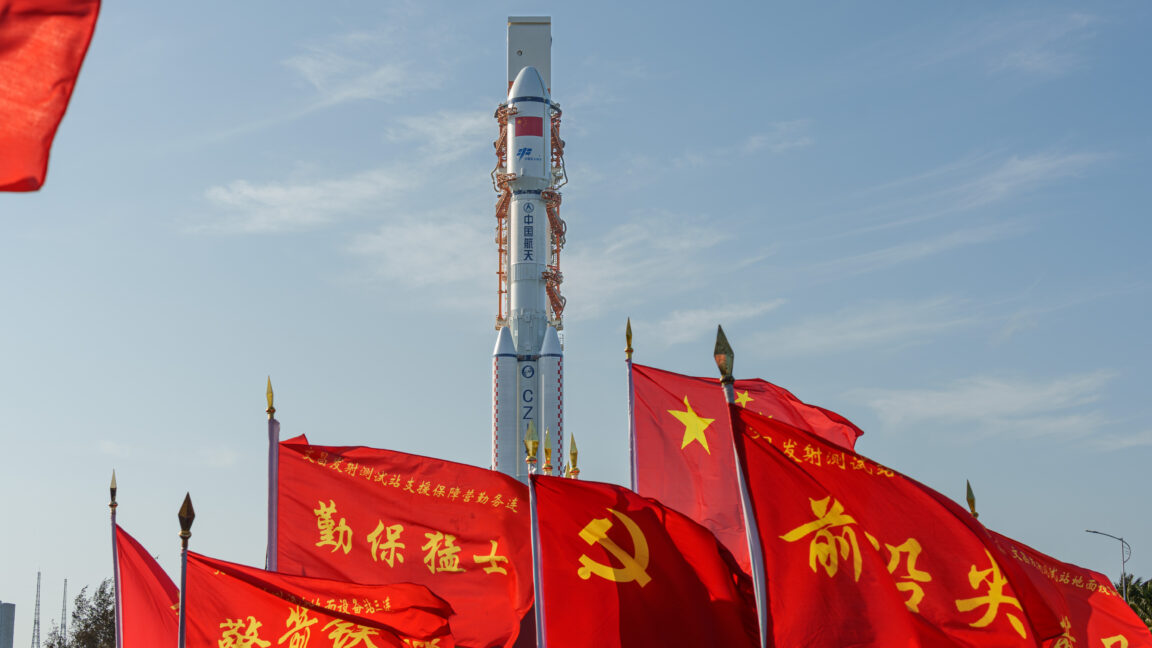
China’s Long March 7A rocket exploded approximately one minute and 20 seconds after liftoff from the Wenchang Space Launch Site on Monday evening, resulting in the loss of its payload. The medium-lift vehicle, developed by the China Aerospace Science and Technology Corporation and operated by the state’s space agency, was carrying a classified mission believed to be a military communications satellite. While the initial ascent appeared nominal, publicly captured footage shows the first stage disintegrating shortly after reaching maximum dynamic pressure in the lower atmosphere.
State officials have not yet provided an official explanation for the incident. The timing of the explosion suggests the vehicle may have been terminated by an on-board flight termination system after veering off course, or it could indicate a mechanical failure within the YF-100 engine. The uncertainty surrounding the cause makes it difficult to assess the broader implications for China’s space program, which has maintained a high success rate with over 50 annual flights in the last five years.
The YF-100 engine is the most widely used propulsion system in China’s space sector, providing 270,000 pounds of sea-level thrust. Fuelled by liquid oxygen and kerosene, it has powered various missions for the past decade, including communications satellite launches and Tianzhou cargo spacecraft resupplying the Chinese space station. Its ubiquity means that any defect in the engine’s design or manufacturing could have systemic consequences across multiple launch vehicles.
As many as nine different Chinese rockets, including the Long March 5, Long March 8, and the newer Long March 10, utilise variants of the YF-100 technology. If the failure is attributed to the engine rather than a guidance error, it could trigger a widespread review of launch readiness. This potential bottleneck is particularly concerning given the tight schedule for China’s upcoming lunar ambitions.
The most immediate impact is expected on the Chang’e 7 mission, scheduled to launch on a Long March 5 rocket approximately two weeks from now. The Long March 5’s boosters are powered by YF-100 engines. Chang’e 7 aims to deploy a rover to the Shackleton crater region near the Moon’s South Pole, marking the first time any country will attempt to explore this resource-rich area. The incident underscores the competitive pressure between China and NASA to establish operational presence at the lunar South Pole.