China’s LineShine supercomputer reclaims world’s fastest title with CPU-only architecture
The new benchmark leader achieves 2.198 exaflops of sustained double-precision performance, bypassing GPU embargoes through custom processor design.
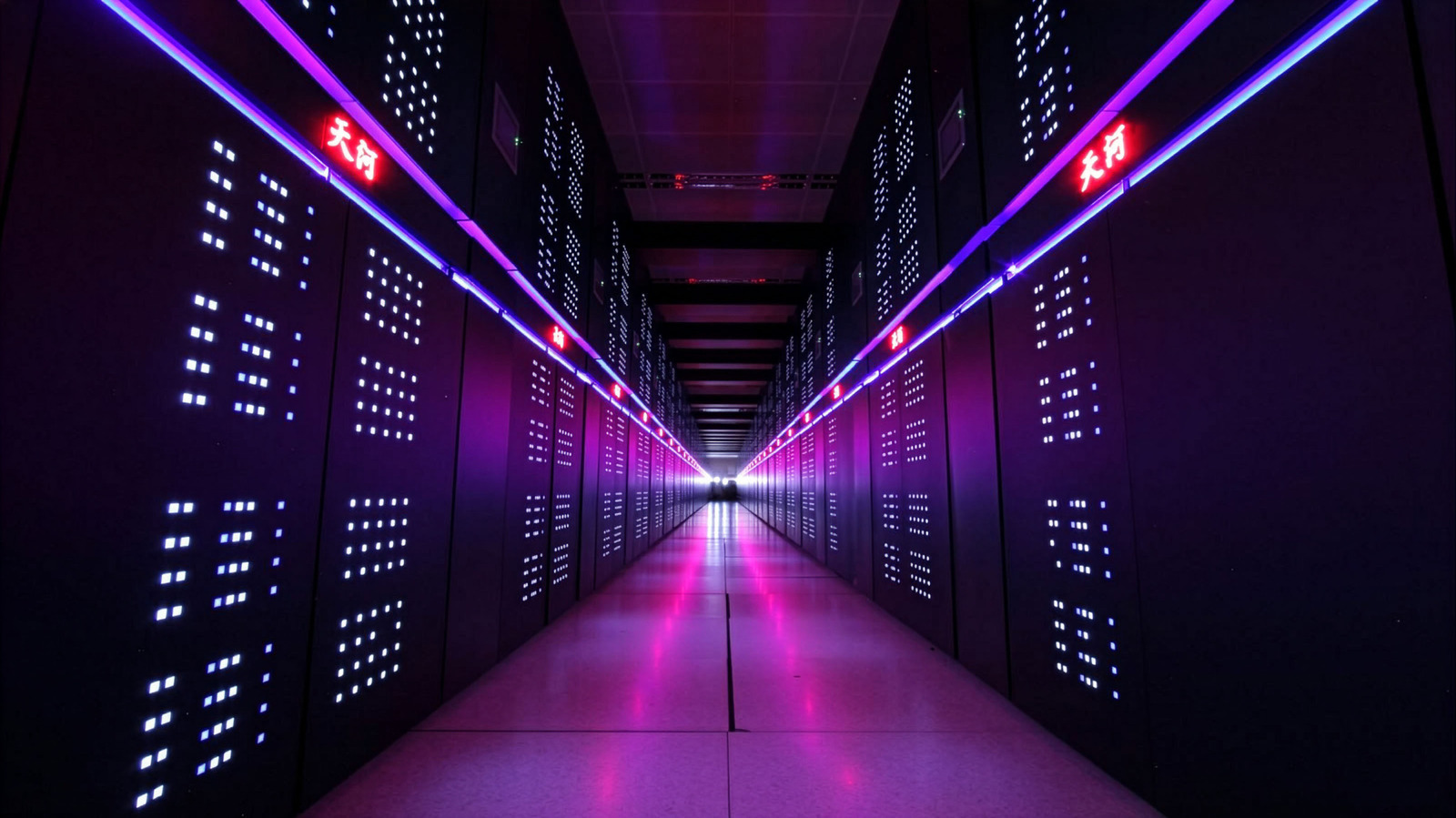
China has reclaimed the title of the world’s fastest supercomputer with its LineShine system, which achieved 2.198 exaflops of sustained double-precision performance. Developed by the National Supercomputer Center, the machine surpassed the United States’ El Capitan system, which recorded 1.809 exaflops. This ranking marks the first time China has held the top spot since 2017.
LineShine utilises a custom 304-core processor architecture with 13.79 million cores running at 1.55GHz, allowing it to bypass technology embargoes that typically restrict access to GPUs. The system is linked by a proprietary interconnect and consumes approximately 42.2 megawatts of power, achieving an efficiency of 52.07 Gigaflops per watt. It is the first supercomputer to exceed two exaflops using CPUs only.
The machine was developed without public funding, a decision that allowed designers to submit it to Top500 tests without the restrictions that often keep such designs under guard. While the specific manufacturer of the CPUs and the exact chip technology employed remain undisclosed, the system’s performance highlights a shift in architectural strategy away from reliance on restricted graphics processing units.
Top500 organizer Dr Jack Dongarra described the system as impressive, noting that China had upended the benchmark by developing a solution not reliant on GPUs. The latest list now includes five systems exceeding the exascale threshold: one in China, three in the US, and one in Germany.
Other notable rankings include Oak Ridge National Laboratory’s Frontier at No. 3 with 1.353 exaflops, Argonne National Laboratory’s Aurora at No. 4 with 1.012 exaflops, and the Jülich Supercomputing Centre’s Jupiter Booster at No. 5 with exactly one exaflop.
Top500 noted a significant increase in architectural diversity across the rankings. The organisation stated that there is no single dominant technology path to leadership-class computing, with vendors pursuing a variety of CPU, GPU, APU, and custom-accelerator approaches rather than a single standard.