Apple’s measured AI pivot signals financial prudence over industry arms race
As competitors burn billions on rapid deployment, Apple’s strategic delay and lower capex spend position the tech giant for sustainable services growth, according to analysts.
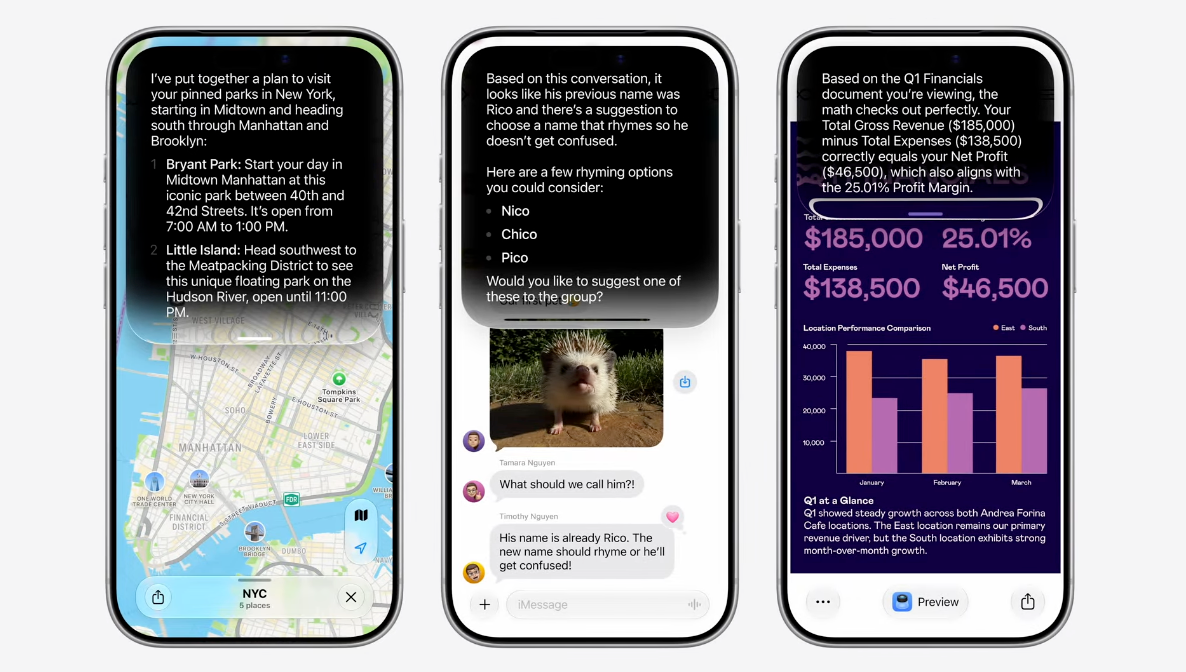
Apple has unveiled Siri AI, a significant update to its virtual assistant that embeds automated capabilities powered by a partnership with Google’s Gemini model. The announcement, which included comments from senior vice president Craig Federighi defending the company’s measured approach, contrasts sharply with the rapid deployment strategies pursued by rivals such as OpenAI and Meta. The new features, including onscreen awareness and cross-device functionality, are scheduled for a beta release later this year, with full availability expected in the autumn.
The revamped Siri is built on a 1.2 trillion parameter system developed in collaboration with Google. This infrastructure allows the assistant to pull near-instantaneous, up-to-date information from the web and deliver it directly to the device. Key capabilities include the ability to surface information buried in email and text history, provide context about onscreen content, and store chat histories for user access. Federighi framed the update as a response to consumer ambivalence regarding artificial intelligence, positioning Apple’s technology as intuitive and helpful rather than a race for its own sake.
Apple’s strategy highlights a distinct divergence in capital expenditure compared to industry peers. The company plans to spend roughly $14 billion on artificial intelligence capital expenditure this year, a figure significantly lower than the cumulative $900 billion committed by other major technology giants. This financial prudence aligns with Apple’s hardware-centric business model, which prioritises user convenience and device retention over standalone software sales. The update aims to make Apple’s ecosystem incrementally more convenient, thereby strengthening hardware loyalty without the heavy spending burden seen elsewhere in the sector.
The move also presents a strategic threat to competitors whose applications currently dominate the App Store. By embedding AI functionalities directly into the operating system, Apple reduces the distribution advantage held by third-party chatbot providers. This integration allows Apple to capture value from users who might otherwise rely on external applications, while simultaneously generating revenue from the taxes levied on AI companies that use the App Store to platform their own applications.
Market reaction has been cautious but positive, with Citi reaffirming a buy rating for Apple ahead of the announcement. The bank cited potential growth in Siri AI and services as key drivers, noting that the June 8 conference served as a preview of the upcoming update. While consumer sentiment towards artificial intelligence remains mixed, with concerns about job displacement and cognitive impacts, Apple’s focus on practical utility and lower financial risk appears to be resonating with investors seeking stability in a volatile technological landscape.