Apple to challenge AI giants with standalone Siri app and iOS 27 overhaul
The tech giant plans to leverage its 2.5 billion device install base to compete directly with ChatGPT and Claude, utilising Google’s Gemini technology for immediate capabilities while developing local models for privacy.
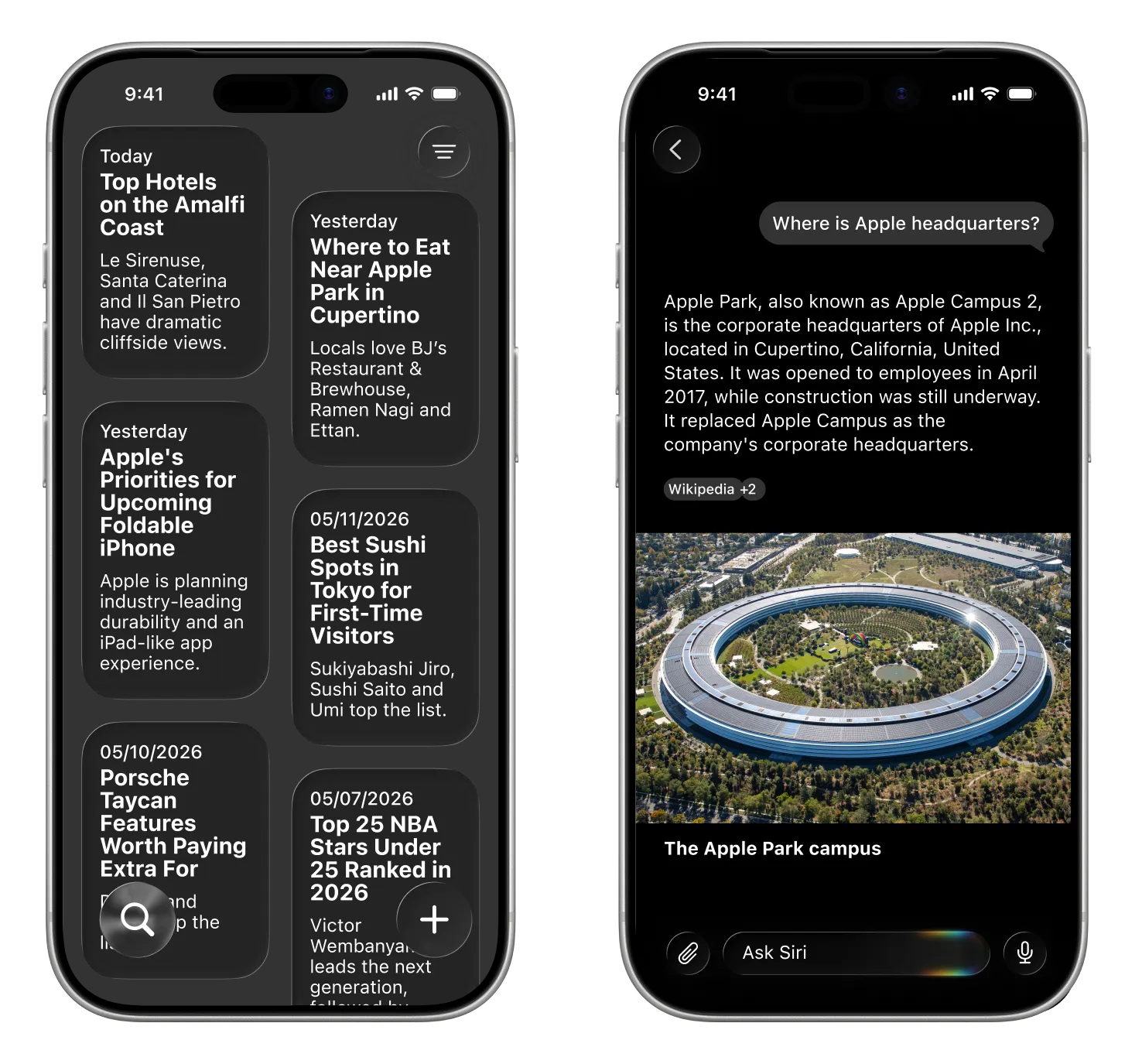
Ahead of its Worldwide Developers Conference in June, Apple has provided a glimpse into its upcoming artificial intelligence strategy through leaked renders published by Bloomberg. The images, derived from sources familiar with the project, outline a significant overhaul for iOS 27 that integrates a redesigned Siri experience powered by Google’s Gemini technology. This move signals Apple’s intent to deepen its reliance on external partners for immediate AI capabilities while maintaining its focus on long-term, privacy-centric development.
The updated interface will see Siri responses and card-style search results emerging from the iPhone’s Dynamic Island, replacing the traditional full-screen animations. This design is optimised for quick voice queries, allowing users to interact with the assistant without obscuring the rest of the screen. Additionally, the swipe-down gesture on the home screen, historically used to access Spotlight Search, will now trigger AI-powered search capabilities. This integration aims to capitalise on user muscle memory, delivering results in a formatted text interface that draws on the intelligence of the new Gemini-based model.
A key component of this strategy is the introduction of a standalone Siri app, designed to compete directly with established chatbots such as ChatGPT, Claude, and Gemini. The application will feature chat history, document uploads, and photo integration, offering a more robust conversational experience than the current system-level assistant. By launching this dedicated app, Apple seeks to capture users who may not yet have adopted standalone AI tools, leveraging its massive installed base of 2.5 billion devices compared to ChatGPT’s 900 million weekly active users.
This approach mirrors Apple’s longstanding multi-billion dollar partnership with Google, which established the search engine as the default on iPhones. Bloomberg notes that building a comprehensive AI foundation from scratch remains too expensive and complex for the company at this stage. Consequently, Apple is utilising external technology to meet current user demands while simultaneously developing its own local AI models. These on-device models are intended to run locally rather than in the cloud, reinforcing Apple’s brand identity around privacy and data security.
While the renders provide a clear vision of the user experience, they are based on leaks and do not constitute official confirmation from Apple. The exact release date and final feature set for iOS 27 and the standalone Siri app remain unconfirmed. However, the strategic direction is evident: Apple is positioning itself to dominate the AI landscape by combining the reach of its hardware ecosystem with the immediate power of Google’s technology, all while preparing for a future where local processing plays a central role.
