Anthropic’s Cat Wu charts shift to proactive AI as firm eyes $950 billion valuation
Speaking at the Code with Claude conference in San Francisco, Cat Wu described a future where artificial intelligence anticipates user needs, coinciding with reports of the company’s rapid market share growth and potential valuation surpassing OpenAI.
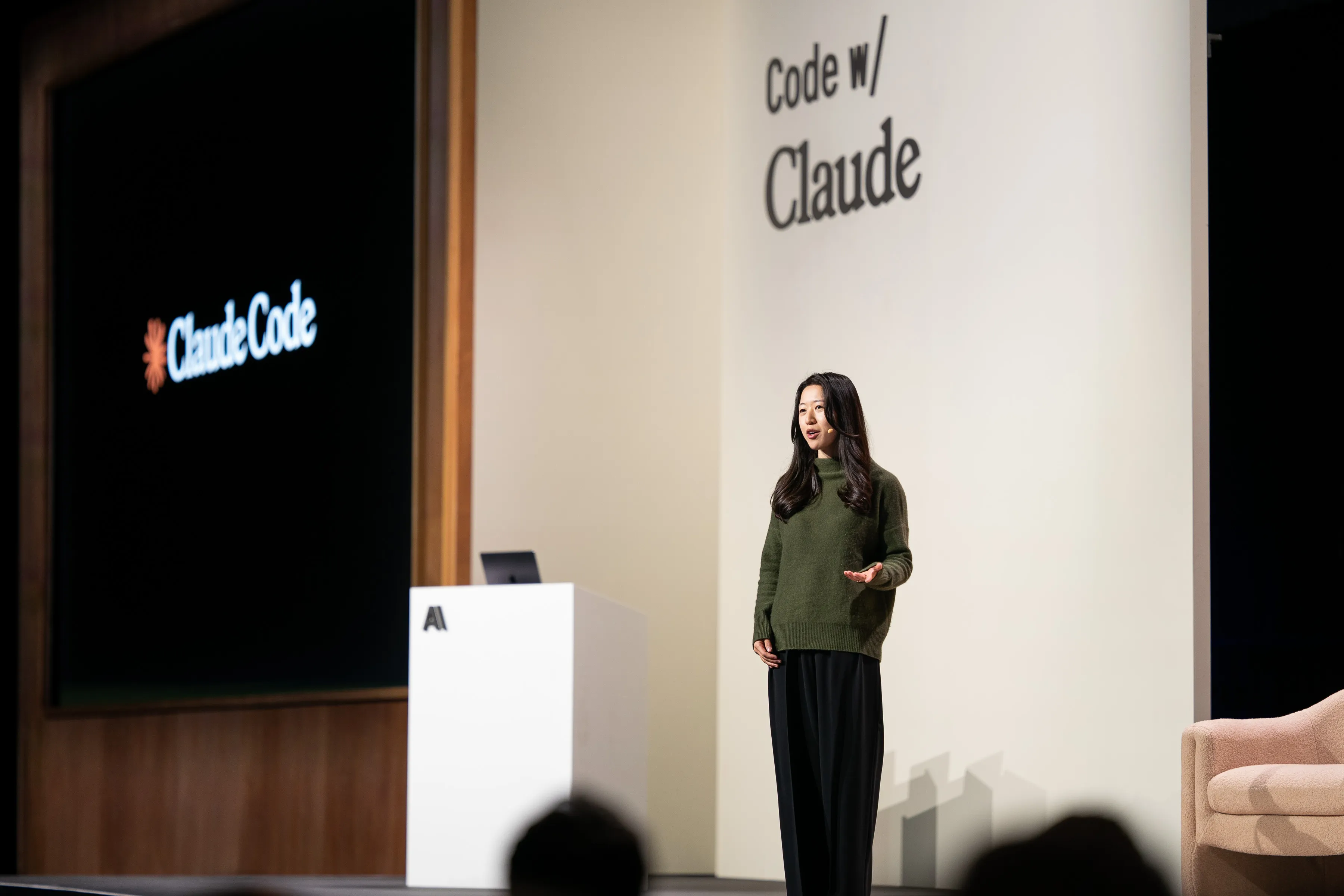
Anthropic is positioning itself at the forefront of a strategic shift in artificial intelligence, moving from reactive tools to proactive systems that anticipate user requirements. Cat Wu, the company’s head of product for Claude Code and Cowork, outlined this vision at the second annual Code with Claude conference in San Francisco last week. Wu stated that the next major development for the technology is proactivity, where AI agents understand a user’s work context to set up automations independently, rather than waiting for explicit instructions.
The comments come amidst reports of significant commercial momentum for Anthropic. The company is reportedly preparing to raise tens of billions of dollars in a funding round that could value the firm at approximately $950 billion. This potential valuation would exceed OpenAI’s March valuation of $854 billion. Recent data suggests Anthropic has outpaced its main competitor among business customers, quadrupling its market share since May 2025, with users increasingly favouring Claude over rival offerings.
Wu, who joined Anthropic in August 2024, emphasised that the company’s product strategy remains focused on maintaining its position at the technological frontier rather than reacting to competitors. She noted that Anthropic has released at least six models last year and has launched almost as many this year, expressing hope that this rapid pace of development will continue. The firm aims to distribute this intelligence widely while ensuring safety, a principle reflected in its April launch of the Glasswing initiative. This project provides access to its cybersecurity model, Mythos, to a consortium including Amazon, Apple, CrowdStrike, and Microsoft, rather than releasing it to the general public due to concerns about potential weaponisation.
Regarding the impact on the workforce, Wu argued that while AI agents may reduce the demand for junior staff by handling tedious tasks, human oversight remains critical. She stated that it is extremely difficult to manage agents effectively without possessing the relevant domain expertise, as managers must be able to debug outputs and interpret why an agent may have misinterpreted instructions. Wu described this new skill set as similar to traditional management, requiring leaders to understand the nuances of the work being automated.
Looking ahead, Wu characterised the current phase of AI adoption as a transition from synchronous development to routine automation, such as handling customer support tickets. She predicted that the next step involves Claude understanding broader work contexts to proactively establish these automations. This evolution aligns with Wu’s previous assertion that the future of work will involve staff managing fleets of agents, ultimately aiming to free up human workers to focus on more complex and creative projects.
