AI Factories and Data Sovereignty Strategies
At the MIT Technology Review EmTech AI conference, experts from Hewlett Packard Enterprise and Oak Ridge National Laboratory addressed how secure, scalable national- and enterprise-grade capabilities are being developed while balancing data ownership with the secure flow of high-quality information.
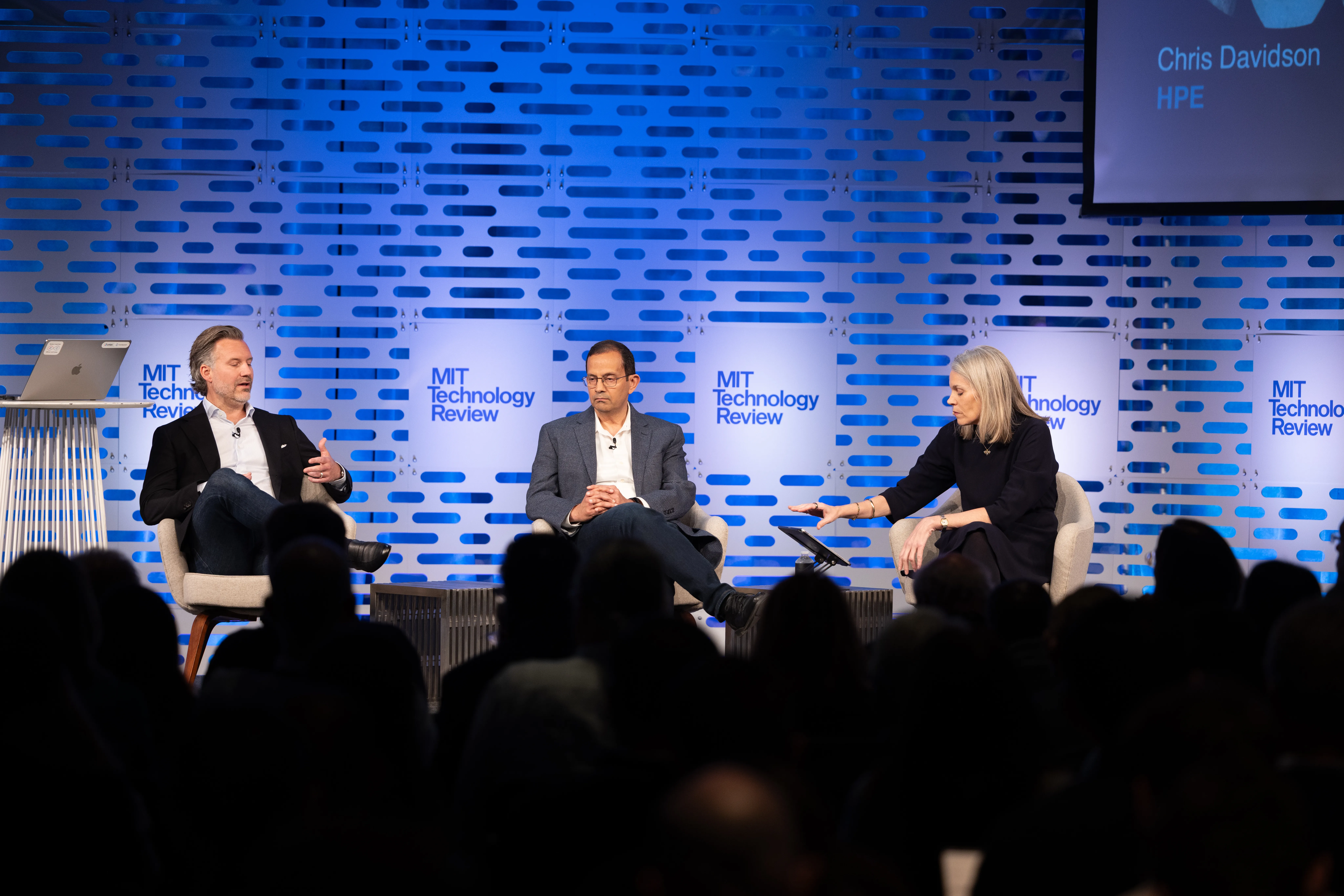
The pace of artificial intelligence development is currently described as a sprint, creating a challenge for institutions to keep up with rapid advancements. In response to this accelerating landscape, industry leaders gathered at the MIT Technology Review EmTech AI conference to discuss the operationalisation of AI through 'AI factories'. This framework is being framed as a method to unlock new levels of scale, sustainability, and governance for the sector.
Central to the dialogue was the strategic imperative for governments and enterprises to control their own data to tailor AI solutions effectively. Chris Davidson, Vice President of HPC & AI Customer Solutions at Hewlett Packard Enterprise, highlighted that companies are increasingly taking control of their data to meet specific needs. However, the conversation emphasised that the core challenge lies in balancing this ownership with the safe, trusted flow of high-quality data required to power reliable insights.
Davidson leads the global strategy for HPE's AI Factory solutions and Sovereign AI, working with various entities to build secure, scalable capabilities. His role involves directing product management and performance engineering across HPE's high-performance computing and AI portfolio, which includes large-model training platforms and Cray exascale systems. Over nine years at the company, he has shaped how HPE delivers optimised, cloud-native, and globally deployed high-performance systems, positioning data control as a critical component of their product strategy and deployment models.
Complementing the industry perspective, Mallikarjun Shankar, Division Director for the National Center for Computational Science at Oak Ridge National Laboratory, addressed the development of secure, scalable national- and enterprise-grade AI capabilities. Shankar focuses on the interdisciplinary bridge between computer science and large-scale scientific discovery campaigns that rely on scalable computing and data science. As a joint faculty appointee at the University of Tennessee's Bredesen Center and a senior member of both the IEEE and the ACM, he brings significant expertise to the discussion on computational science.
The conference also featured other significant developments in the field, including an exclusive conversation with Jakub Pachocki, chief scientist at OpenAI, regarding the firm's new grand challenge and the future of AI. Additionally, updates were shared on Niantic's AI spinout, which is training a new world model using 30 billion images of urban landmarks crowdsourced from players.
Despite these advancements, the report noted that the impact of new tools, such as those from Axiom Math, on speeding up research remains unproven. As the field continues to sprint, the focus remains on how institutions can utilise AI factories to maintain sovereignty while ensuring the secure flow of data necessary for scientific and commercial progress.