2026 World Cup Ball Trionda Shows Reduced Range at High Speeds in New Study
Wind tunnel tests reveal the four-panel Trionda reaches critical drag at 43km/h, offering stability in short plays but sacrificing distance on long clearances.
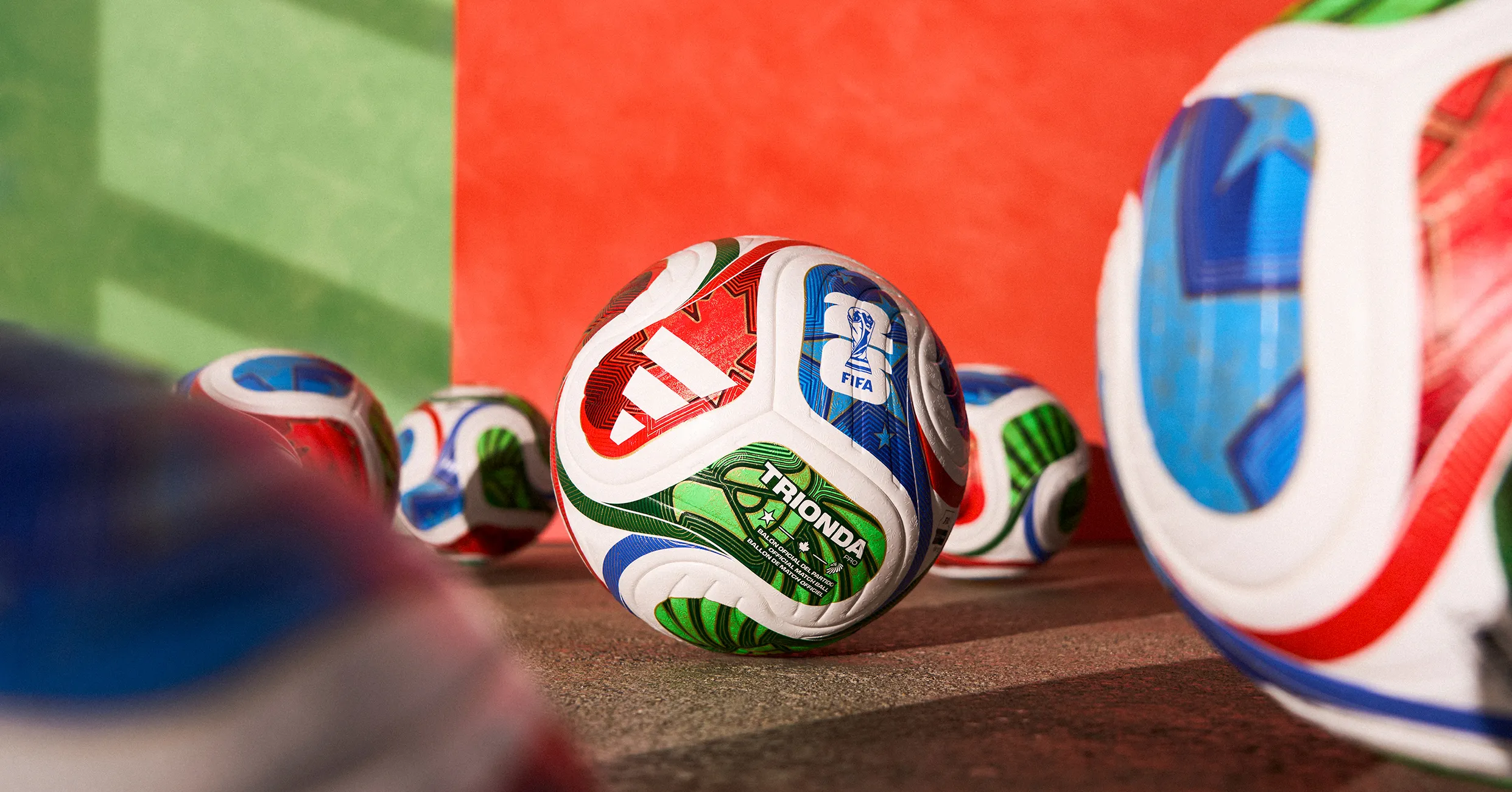
New research from the University of Puget Sound indicates that the Trionda, the official match ball for the 2026 FIFA World Cup, possesses distinct aerodynamic characteristics that differ significantly from its predecessors. John Eric Goff, a visiting professor of physics at the university, led a study examining how the ball’s unique design influences flight stability and range during high-speed play.
The Trionda is the first men’s World Cup ball constructed with only four panels, which are thermally bonded together using heat and adhesives. This structure results in a shorter overall seam length and a smoother surface compared to previous models. To counteract the unpredictable movement seen in earlier designs like the 2010 Jabulani, Adidas incorporated deep stitching, three pronounced grooves in each panel, and a textured surface intended to improve aerodynamic stability.
Wind tunnel tests conducted for the study measured the ball’s aerodynamic force coefficients and analysed the so-called aerodynamic drag crisis, a phenomenon where air resistance changes abruptly at specific speeds. The results showed that the Trionda reaches its critical point of aerodynamic drag at approximately 43km/h. This threshold is lower than the 50km/h to 65km/h range recorded for recent models such as the Al Rihla, Telstar 18, and Brazuca, and significantly below the 79km/h to 97km/h range of the Jabulani.
Goff noted that the smoother surface and earlier drag crisis mean the Trionda slows down airflow more evenly during short-distance actions. This design should result in greater stability and less unpredictable movement during corner kicks and free kicks. However, the ball loses range at higher speeds, which could cause long-distance goal kicks and clearances to fall short by several metres compared to previous tournament balls.
The study also examined the integration of connected-ball technology within the Trionda. Unlike previous models where the sensor was suspended in the centre, the Trionda’s sensor is located in an inner layer inside one panel, with counterweights placed in the other three to balance the structure. The researchers suggest this internal architecture may further influence the ball’s aerodynamics, although the simulations did not account for variables such as altitude, humidity, temperature, or atmospheric pressure.
While the differences in flight behaviour compared to recent models are not massive, Goff stated they are significant enough for players to notice that long shots may stay a few metres off target. The study serves as a physics-based analysis of how the new design affects the movement of the ball, a factor that could influence the outcomes of the 104 matches scheduled for the tournament.
